
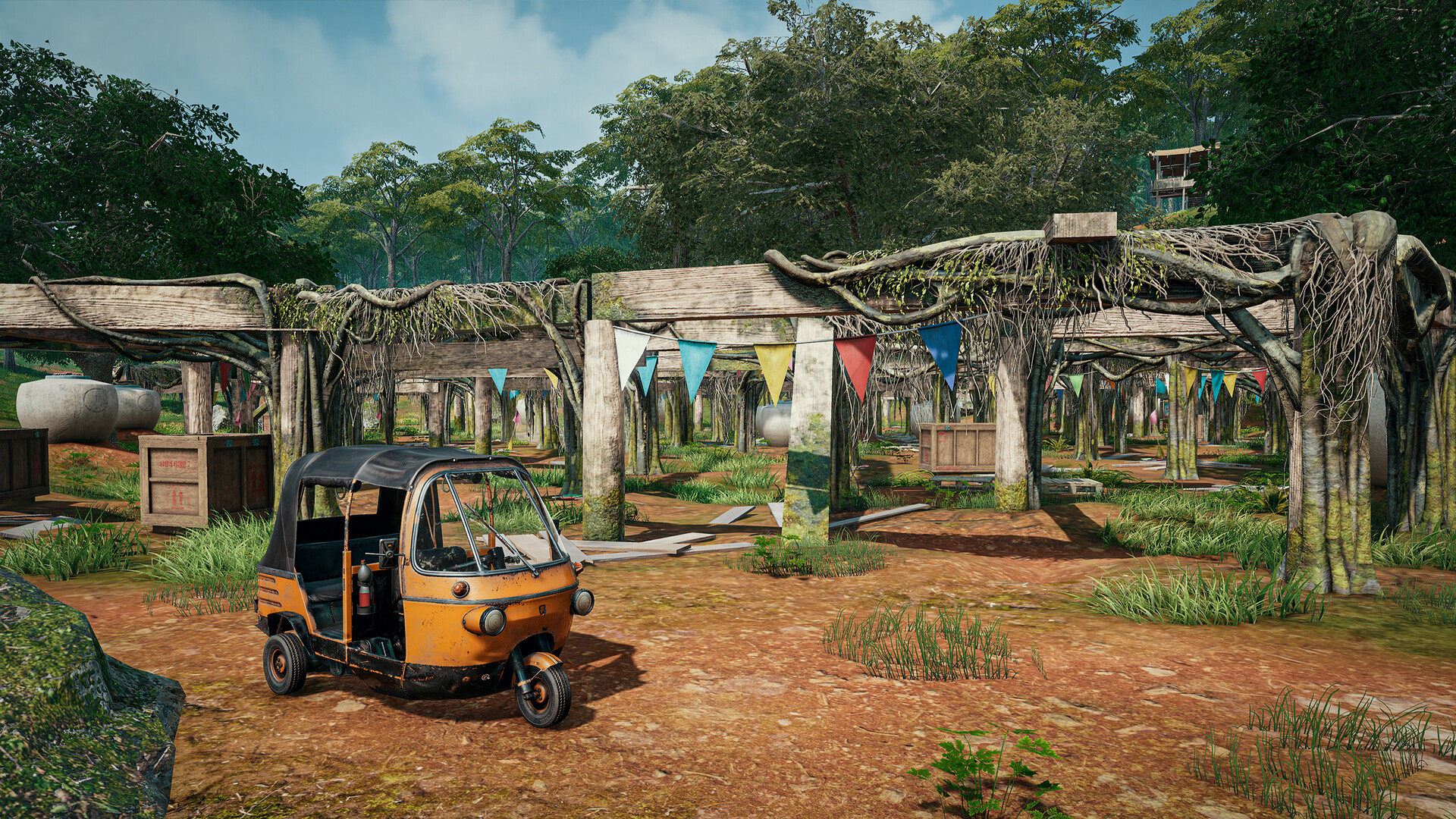
Map knowledge begins with recognizing the environment and the rules in which you are playing. It does not begin with assuming that a screenshot or an old rotation chart describes today's queue. The official PUBG reference provides map identities and broad descriptions, while the map-selection developer letter explains that availability and selection systems can differ by region and platform. Use those sources to frame your questions, then inspect the current client. This page compares several verified map descriptions without claiming to list every currently playable mode. [P10]
Separate the map catalogue from the queue
A map can exist in the official catalogue without being directly selectable in your current region or mode. The map-selection letter dated August 11, 2026, explicitly discusses regional and platform changes. Keep that distinction visible when following a guide. If a recommended map is not offered in your queue, that does not mean your installation is broken or the guide's general rotation principles are unusable.
Record the mode, team format, and perspective you actually selected. A practice session, Arcade match, and ordinary battle royale match can reward different decisions. Before testing advice, ask whether its assumptions match your rules. This is especially important for respawning, recovery, special equipment, or event-specific mechanics. Do not infer a universal rule from one temporary mode.
Compare five official map entries
| Map | Official size label | Environment described by the official reference | First planning question |
|---|---|---|---|
| Erangel | 8x8 | Grasslands, mountains, cities and towns | Which terrain and buildings break the next crossing? |
| Miramar | 8x8 | Open desert landscape | Where can the route avoid prolonged exposure? |
| Sanhok | 4x4 | Compact tropical jungle | Which nearby approaches are hidden by vegetation? |
| Taego | 8x8 | South Korean setting with its own history and locations | What distinguishes this compound from the next? |
| Rondo | 8x8 | Traditional and modern environments | How does the route change between district types? |
The table preserves the dimensions as displayed by the official pages rather than using them to invent travel times. A nominal map size does not tell you how long a particular route takes. Terrain, transport, zone position, and other players matter to the actual decision. [P04] [P05] [P06] [P07] [P08]
Erangel and Miramar ask different exposure questions
Erangel's official description combines open ground with mountains and settlements. Use that variety to practice identifying a sequence of positions rather than memorizing only a destination name. On one route the useful feature may be terrain; on another it may be a group of buildings. The map-room habit is to ask what you can see from the next stop and what can see you.
Miramar's description emphasizes a barren desert landscape. Treat the open view as a planning problem: locate terrain breaks, structures, and an alternative if the intended crossing is pressured. Do not assume every visible opponent should immediately be engaged. The location of your next cover and the time needed to reach safety can matter more than taking a low-information shot. These are route-reading recommendations, not claims about a permanently safe named compound. [P04] [P05]
Sanhok, Taego and Rondo broaden the comparison
Sanhok's official page describes a smaller tropical environment and nearby enemies. Vegetation can reduce visibility without removing danger. When you move between structures or trees, distinguish an unseen approach from a confirmed empty one. Practice clear teammate callouts because a vague direction can be difficult to interpret when several similar features fill the view. [P06]
Taego's official entry provides its own setting and identity. Use recognizable buildings and terrain as landmarks when building a route vocabulary. A useful personal map note records what made the position valuable in that match, not merely its name. If it was useful because of one circle and one approach, avoid turning that result into a permanent ranking. [P07]
Rondo explicitly combines traditional aesthetics with modern areas. That contrast is a reminder that one map can contain very different local movement problems. A route through a built-up district and an approach through a more open area should not be treated as the same task merely because the map name is unchanged. Inspect each segment. [P08]
Choose practice modes for the skill you need
The official Arcade overview describes formats including Team Deathmatch and Intense Battle Royale. Use available modes according to the skill you want to repeat. Frequent combat can help you rehearse a familiar weapon action, while a broader battle royale context adds landing, equipment choices, zone movement, and uncertain contact. Neither experience automatically substitutes for the other. Check the current mode rules and availability before planning a session. [P19]
Keep a short map notebook after practice: destination, approach, exposure, useful landmark, and one alternative. Over time, the notes build a set of questions you can reuse when the queue changes. That is more durable than a route presented without its match context, and it remains useful when an update changes the available map selection.