A squad is useful when its players can turn separate observations into a shared decision. Four people moving independently do not automatically create mutual support, and constant conversation does not guarantee useful information. This guide organizes team play around a simple cycle: state the plan, report a change, decide who acts, and regroup. It does not prescribe a universal formation, revive time, or medical-item timing. Use the rules of the selected mode and the current client for those details.
Agree on the first shared decision
Before the landing, choose a marker and an alternative. Make sure everyone knows whether the team is trying to contest a busy location or establish a more measured opening. A player expecting an immediate fight and another expecting uninterrupted looting may both act sensibly according to different assumptions. The disagreement becomes dangerous only when it remains unspoken until the first contact.
After landing, report whether your first kit is usable. “I have a loaded weapon” and “I still need ammunition” are decisions your teammate can act on. A long list of everything in your backpack is usually less helpful during an urgent opening. Share the shortage that changes what the group can attempt next, then continue assembling the kit. Compatibility matters when transferring ammunition and attachments; inspect what your teammate actually uses. [P11]
Make a callout contain a location and a fact
A useful contact report identifies a direction or landmark, an observed action, and the uncertainty if necessary. “One player crossing the road beside the marked building” gives the team something to locate. If you only heard footsteps, say that rather than turning a sound into a claimed visual count. Distinguishing what you saw from what you inferred helps teammates judge the risk.
Keep updates short when the situation changes. Say when the opponent leaves the last known position or when you lose sight of them. Otherwise a teammate may continue aiming at an obsolete marker while the threat moves elsewhere. Do not fill the channel with repeated excitement that obscures the one new fact. The purpose is to improve the shared map of the encounter.
Space for support without pretending there is one correct distance
Stay close enough that help is plausible, but do not occupy exactly the same exposed angle by default. Terrain, visibility, weapons, and available protection change the useful spacing. Before splitting, identify what each player can observe and how they would reconnect. A wide flank that nobody can support can become a separate fight rather than a team advantage.
When changing position, announce the purpose and destination. Your teammate should know whether you are holding an angle, moving to another building, or disengaging. An unannounced retreat can leave somebody believing they still have support. An unannounced push can force another person into a rescue they did not have time to prepare. Shared timing matters more than copying a formation from a different terrain.
Treat a downed teammate as a situation to read
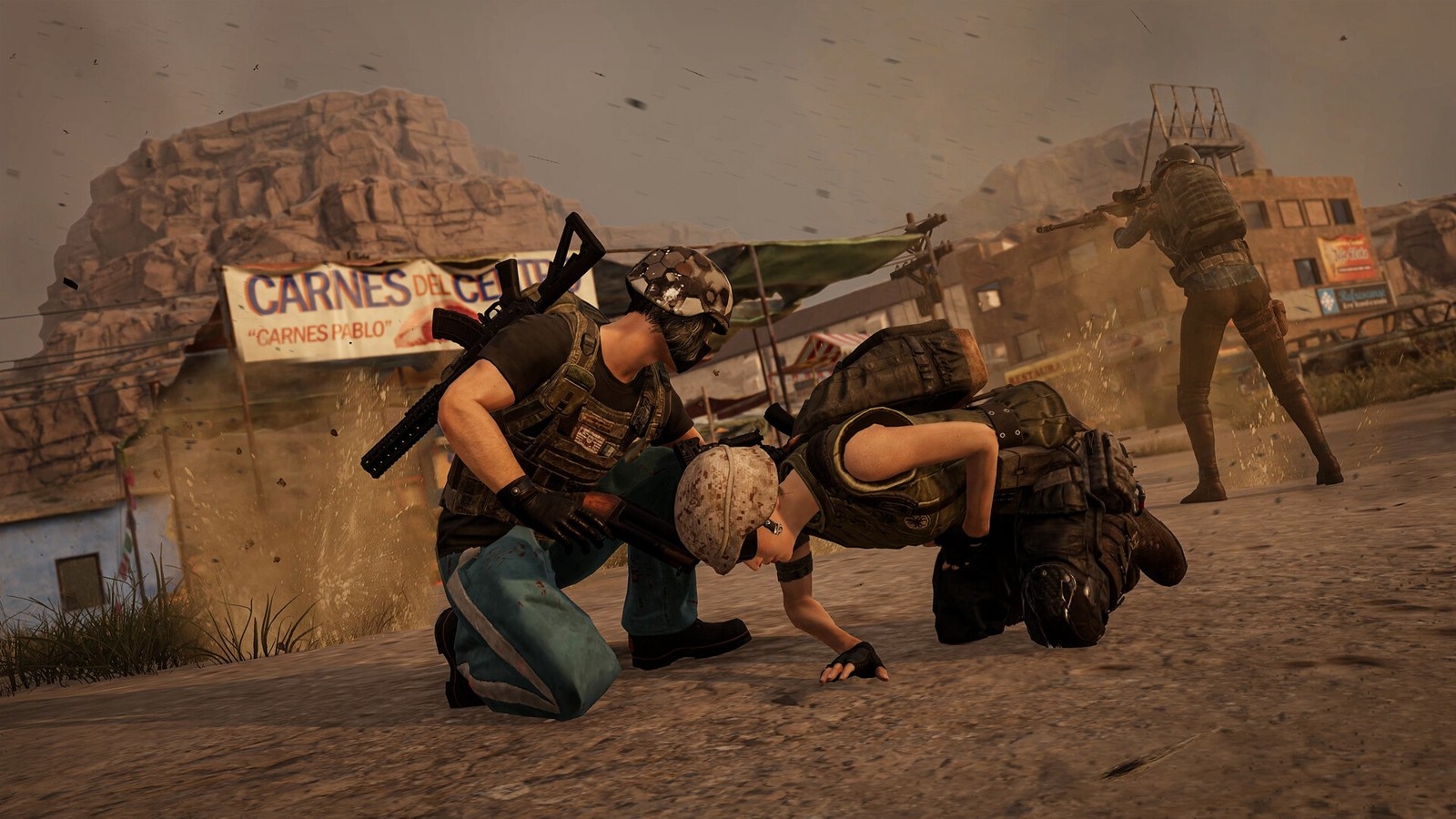
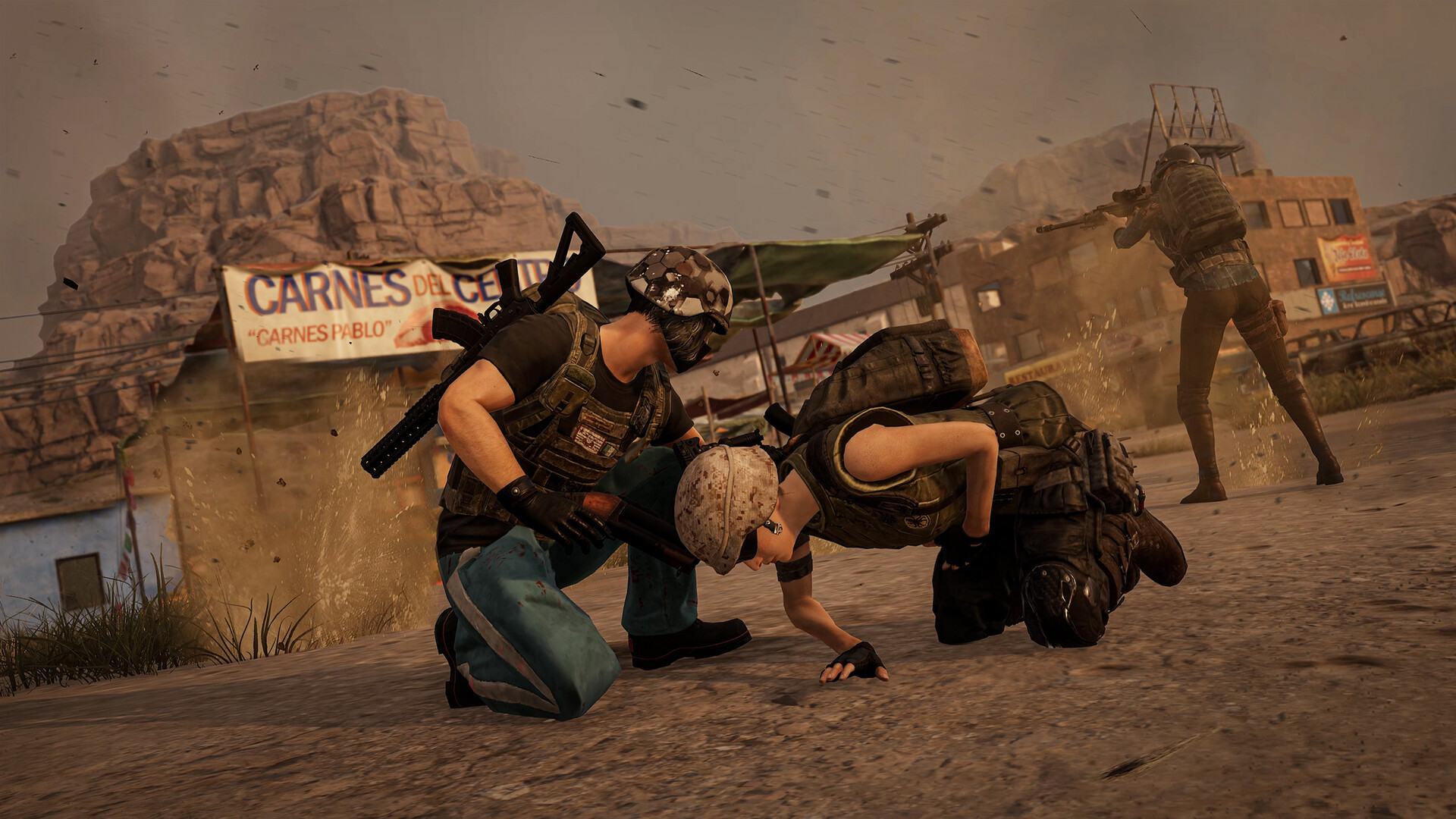
If a teammate goes down, first locate the danger that caused it. Identify the path to them, available protection, and what the rest of the team can observe. Starting assistance without addressing the same exposed line can create a second casualty. The right response depends on the mode and the immediate situation; no guide can guarantee that every attempted rescue is safe or possible.
Assign a clear action. One person may observe the threat while another attempts the recovery, or the team may need to change position first. Explain if the attempt cannot proceed. A specific statement gives the downed player and the remaining team a shared understanding, even when the outcome is unfavorable. Do not promise recovery merely because you have begun moving in their direction.
Make room for healing and regrouping
Medical items require a use action, and the community consumable reference notes that some actions can interrupt it. Check the current item's information rather than importing an old timing chart. When someone says they need to heal or reload, use that information in the next decision. A push that assumes everybody is immediately ready can turn a manageable pause into staggered individual fights. [P15]
After the encounter, report current health, ammunition, and movement readiness before another long search. Decide whether to recover equipment, leave, or take a short observation pause. The Blue Zone and other teams remain part of the situation. Loot is not the only resource; time and the ability to move together can be more important than a marginal attachment upgrade. [P16]
| Team moment | Useful report | Decision it supports |
|---|---|---|
| Opening | Usable weapon or specific shortage | Share supplies or delay a contest |
| Contact | Landmark, observation, uncertainty | Locate the same threat |
| Movement | Purpose and destination | Maintain support |
| Recovery | Threat direction and intended action | Avoid a second casualty |
| After combat | Health, ammunition and readiness | Regroup or rotate |
Debrief the coordination, not only the aim
Choose one moment where the team's assumptions diverged. Perhaps a player moved without a callout, a marker became stale, or someone pushed while support was unavailable. Discuss the observable sequence and agree on one communication change. Avoid claiming to know an opponent's intent or blaming a teammate for information they never received. A useful debrief produces a clearer next decision, which is something the squad can practice together.